Tackling spotted wing drosophila with Asiatic parasitic wasp
Tackling spotted wing drosophila with Asiatic parasitic wasp
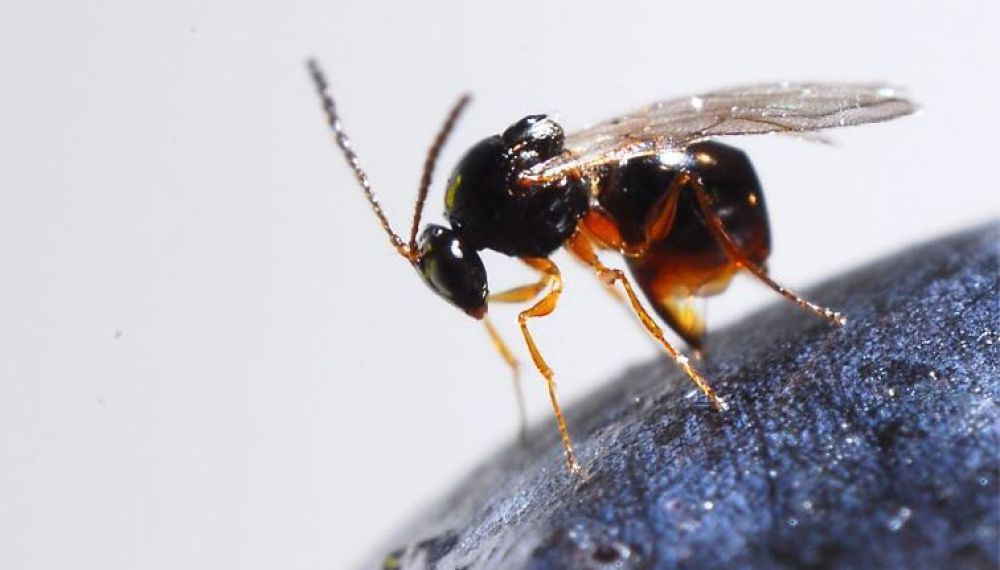
In among other places, France and the Netherlands, research is being done at the moment into parasitic wasp Ganaspis kimorum as a beneficiary of spotted wing drosophila.
In France and the Netherlands, in respectively 2023 and 2025, the first Asiatic parasitic wasps of the genus Ganaspis have been introduced. The species Ganaspis kimorum was chosen, because this parasitic wasp very specifically only parasitises Drosophila suzukii.
The first Ganaspis-parasitic wasps were – in cooperation with the local Chambre d’Agriculture – introduced in September 2023 at 10 different locations in France. In 2024 this was repeated, again at 10 different places and in 2025, at 5 locations.
In the Netherlands, the first Ganaspis parasitic wasps were introduced in 2025. wasps were introduced in August in places with many wild blackberries and other ripening fruit. These are favourite breeding places for spotted wing drosophila. The researchers expect the parasitic wasps to multiply on spotted wing drosophila larvae and to gradually spread.
No panacea
With only parasitic wasps, spotted wing drosophila cannot be totally controlled, WUR researcher Herman Helsen argues. “Spotted wing drosophila has been able to establish world-wide, because outside Asia there are no beneficials. More than fifty plant species grow in the Netherlands on which spotted wing drosophila can live. As a result, it is able to multiply everywhere in the landscape. This results in a continuous stream of spotted wing drosophila to the orchards, which makes control troublesome. By deploying a specialised beneficial now, growth of the spotted wing drosophila fruit fly population can be curbed. This helps to reduce pressure on cultivations, but extra measures in the crops remain necessary.”
Read more about the possibilities and limitations of parasitic wasps against spotted wing drosophila in the article in the November issue of EFM.