Severe night frost in Poland for the third year in a row
Severe night frost in Poland for the third year in a row
28-04-2026
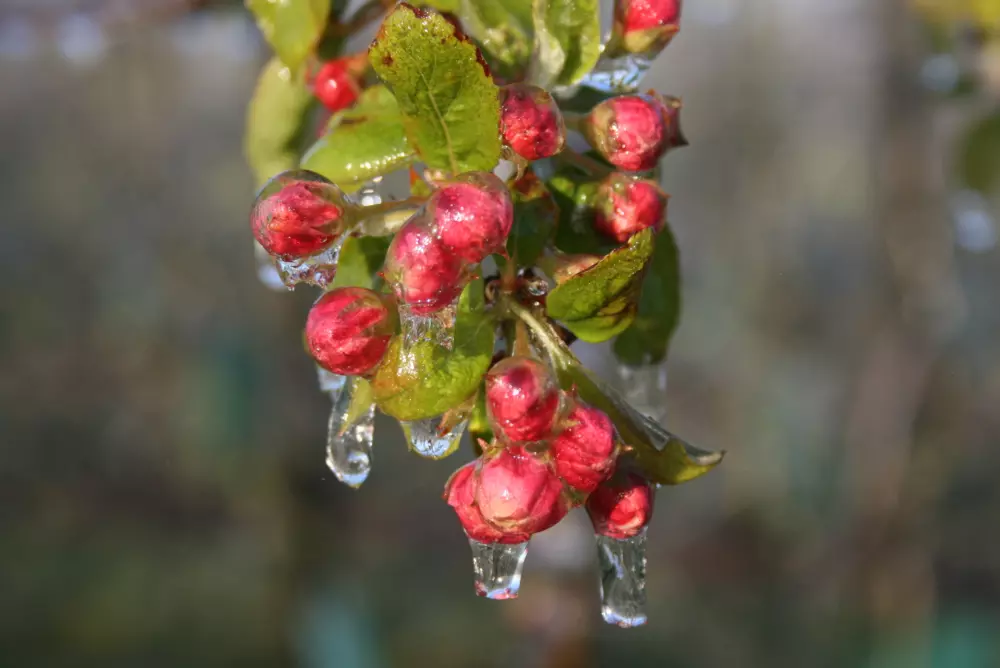
In late April, night frost caused significant damage in Poland’s main fruit-growing regions. This marks the third consecutive year that Poland’s apple harvest will be significantly lower than its potential.
Temperatures even dropped locally to -8°C at ground level. At the time of the frost, the apple trees in the main fruit-growing regions were in the pink-bud stage. The flowers are very sensitive to frost at this stage. The hardest-hit areas are Mazovia and Łódź. The large and well-known fruit-growing regions around Grojec and Warka are located in the Mazovia Voivodeship. According to the website Sad24.pl, 90 to 100% of the harvest has been destroyed at various farms. In smaller fruit-growing regions such as Lublin and Sandomierz, temperatures also dropped to -4°C and locally even to -8°C, resulting in significant damage. The trees here were already somewhat further along in their development and were in the early flowering stage.
In areas where night frost irrigation is possible, such as around Wilga southeast of Warsaw, there is also damage, because the night frost irrigation could not sufficiently protect the flowers at the very low temperatures.
Compensation demanded
The Polish fruit growers’ association immediately began collecting information on temperatures and damage. The association intends to use this data to apply to the European Commission for compensation for the affected farms. Discussions are also underway with Polish Minister of Agriculture Stefan Krajewski regarding a contribution from Polish funds.
According to the Polish fruit growers’ association, however, emergency aid alone is not enough. Night frost damage is no longer an isolated incident but an annual occurrence. This requires investments in night frost protection measures, such as irrigation systems.
Export markets threatened
According to Mirosław Maliszewski, chairman of the Polish fruit growers’ association, the consequences of the frost extend far beyond individual fruit farms. A shortage of produce means that exporters cannot sufficiently supply their export markets—built up over many years—with Polish apples.