Renewed discussion on safety glyphosate
Renewed discussion on safety glyphosate
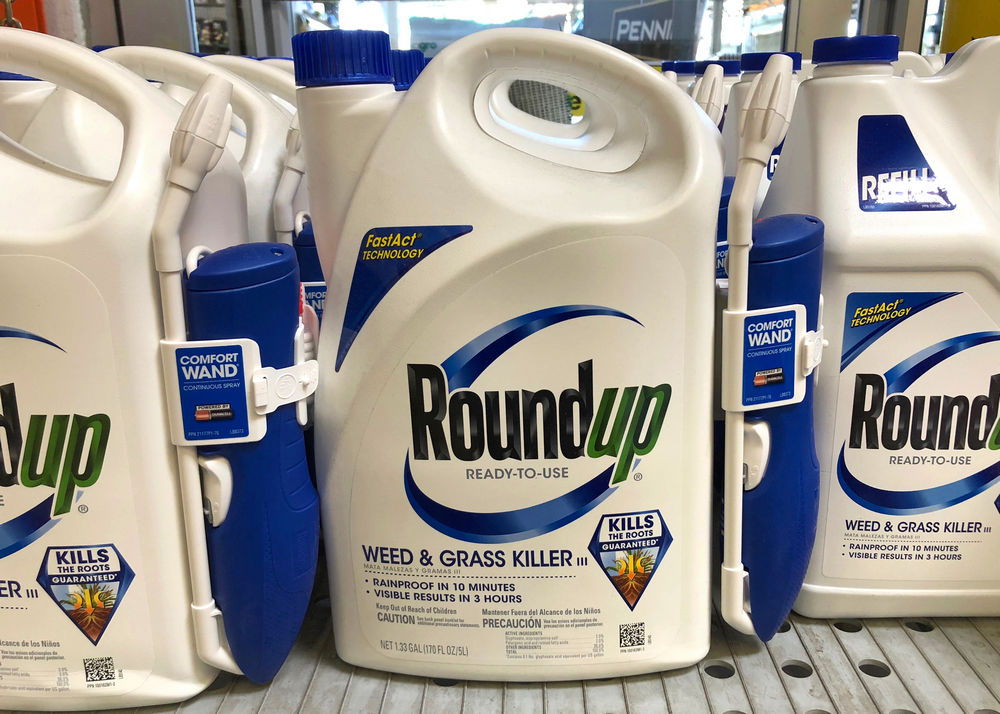
After years of research and lawsuits, new recently published research may well have major consequences for the authorisation of glyphosate. During laboratory research, scientists have found that the product causes cancer in rats, also at low dosages. According to experts, this research will have an impact on the following round of evaluations of glyphosate. At the same time the search is still going on for an efficacious and safe alternative for this active ingredient.
In 2015, glyphosate was classified by the World Health Organisation as ‘probably causing’ cancer in humans, but a hard link between the product and the disease has not been found before, as was reported by the Belgian news website Vilt.be in mid-June.
Research on rats
In the new research, the relation between glyphosate and cancer was researched on about 1,000 laboratory rats. Part of the rats was exposed to glyphosate, another part was not. Again and again some of the laboratory animals developed cancer and this did not happen in the control group. The damage to health mainly takes place in rats during pregnancy and in their first year of life. According to experts, rats genetically show a great resemblance to humans as a result of which disease symptoms caused in rats may also be expected in humans.
To what extent are we being exposed to glyphosate?
It has been established that rats coming into contact with glyphosate can develop cancer. But how do people get into contact with glyphosate? VILT asked Belgian Professor Pieter Spanoghe, an expert in the field of crop protection at Belgian Ghent University (UGent), for a reaction. Spanoghe points out that it is very difficult to assess to what extent people come into contact with glyphosate. “In any case, it does not end up on our fruits and vegetables”, he says. Because if you spray it on to fruits and vegetables, the plants die and you no longer have any fruits and vegetables. “So, consumers mainly come into contact with the product via the living environment. These are very small amounts that cannot be measured correctly to be applied to rats and mice in toxicological tests. In the research the exposure has to be brought about via the skin or respiration because food is not the most important route of exposure. This is the reason why the research in the lab is often far removed from what happens in practice in the field.”
New round of evaluations
And yet, according to Spanoghe the research will have consequences. “This kind of research will undoubtedly be considered in the new evaluation round for glyphosate. Every active ingredient that is on the market in Europe, must be reassessed every 10 to 15 years for its impact on humans and the environment. Studies such as this are then completely incorporated in the new evaluation.”
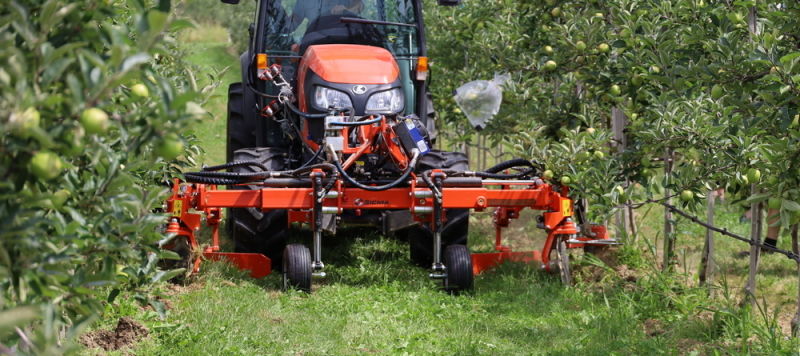
There are no good alternatives that have a similar spectrum of activity and the same efficacy as glyphosate.
There are no alternatives of equal value
Seen from the point of view of farmers and growers, the problem is that no alternative products are available with the same spectrum of activity and the same efficacy as glyphosate. In case glyphosate would no longer be available, growers have to resort to a combination of less efficacious techniques that have to be applied much more frequently than glyphosate.
And the question remains, whether the environmental impact of the alternatives is more favourable than that of glyphosate. “One thing is clear, which is that an alternative is most likely to be more expensive, more knowledge-intensive and more unpredictable and not necessarily a priori less harmful”, Professor Benny De Cauwer, expert in crop protection at UGent says. “The question also remains, whether what replaces glyphosate has a less negative impact on humans, animals and the environment anyhow. This is not a simple one-to-one comparison.”