In search of the healthiest apple varieties
In search of the healthiest apple varieties
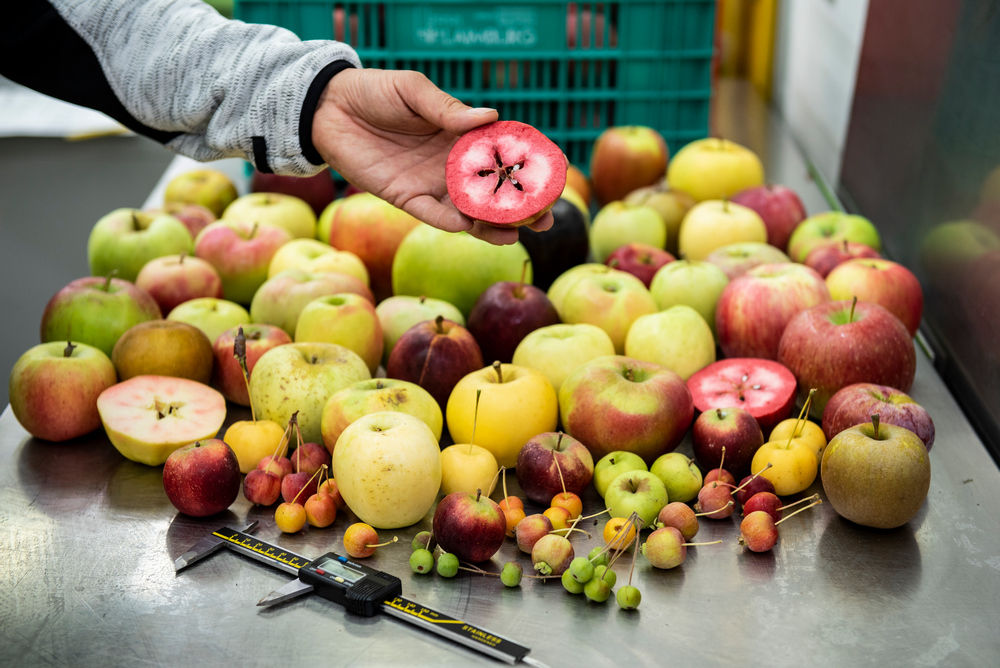
Apples are good for people's health. There is no doubt about that. But some varieties are even healthier than others. How do we know which health-promoting properties a particular variety has? Researchers from South Tyrol in northern Italy hope to find an answer to this question
The genetic diversity of apples offers valuable opportunities to meet future challenges in agriculture and to improve our nutrition. The ‘Cleargenes’ research project was launched with this in mind. The project partners have set themselves the goal of scrutinising the constituents of different apple varieties in order to find out which varieties are particularly beneficial to health.
Valuable components
In addition to the well-known primary components such as sugar, fibre and organic acids, apples also contain secondary plant substances, including polyphenols. These lesser-known constituents are known for their health-promoting properties, such as their anti-inflammatory and antimicrobial effects. As these aspects of the apple have only been marginally investigated so far, a more in-depth analysis is needed to understand and promote the full range of functional properties of the apple. This is where the ‘Cleargenes’ project comes in. The aim of the project is to decipher the genetic fundamentals that are responsible for the formation of secondary plant substances in apples. "With ‘Cleargenes’, we want to find out which apple varieties offer the greatest benefits for human health", explains Walter Guerra, Head of the Institute of Fruit and Viticulture at the Laimburg Research Centre and project manager.
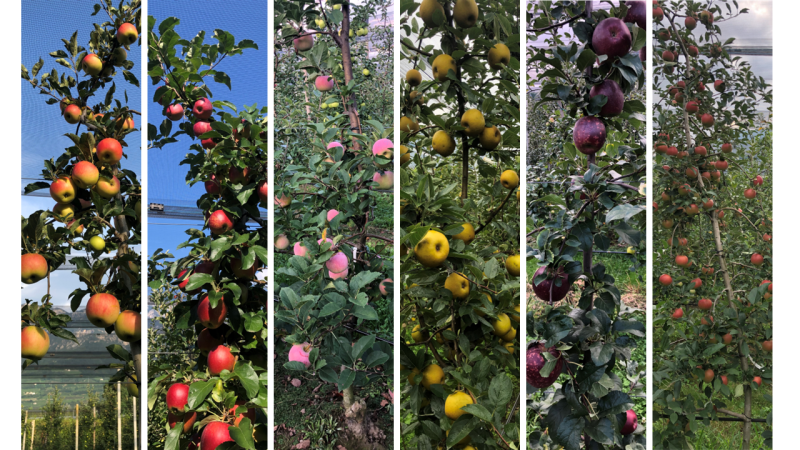
Example of apple trees if the RefPoP collection
Polyphenols
In the project, the researchers are analysing apples from a reference collection called ‘RefPOP’. This unique collection comprises 600 different apple varieties that represent the genetic diversity of the apple. In 2016, ‘RefPOP’ was planted at six different macroclimatic sites across Europe to investigate the interactions between genetics and environment. One focus is on the question of how climatic influences affect the quality characteristics of apples.
As part of ‘Cleargenes’, the researchers take samples of different apple varieties from the trial fields and analyse them for secondary constituents and nutritional-physiological properties. Specifically, the aim is to determine which gene segments control the formation and content of polyphenols. In addition, the metabolome of the apples - the totality of all plant substances, including primary and secondary constituents - will be analysed. The effects of different growing conditions on the metabolome will also be analysed. This analysis enables the researchers to better understand the effects of environmental factors on the health-promoting properties of apples and to specifically identify varieties with high health value.