Frost protection measures in fruit growing are essential – new test results
Frost protection measures in fruit growing are essential – new test results
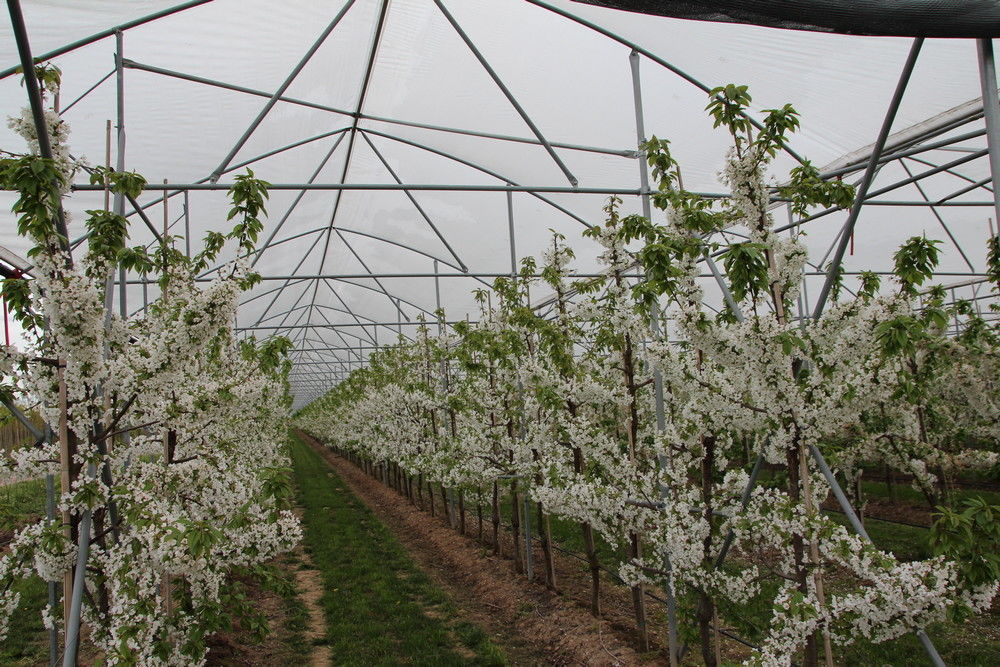
"Frost protection in fruit is becoming increasingly important, as the investment in a system is increasing," explains Alexander Zimmermann of the Bavarian State Research Center for Viticulture and Horticulture (LWG). "Frost protection is an absolute must." In its trials, the LWG has already tested and evaluated numerous devices and measures to mitigate late frost damage in fruit and wine growing. In his presentation, Alexander Zimmermann will provide an overview of the current status of active and passive frost protection measures and present the latest test results.
Radiation frost and wind frost
A general distinction is made between radiation frost and wind frost. Radiation frost usually occurs differently locally and is particularly noticeable in valleys. While the air near the ground is normally warmer than the layers above, this is reversed on cold, frosty nights. Without a protective layer of clouds, the warm air rising from the ground can escape. At the same time, cold air flows from the higher elevations into the valley. This creates an inversion layer, in which temperatures are very cold near the ground and significantly warmer air masses lie a few meters above. In this situation, there is no air exchange by wind because the cold, heavier air masses lie beneath lighter, warm air layers. This leads to the dreaded late frost damage, usually in depressions or areas of accumulation.
Wind frosts, on the other hand, can cause damage to an entire growing region and are in most cases more difficult to prevent. Due to global warming, winters and springs in many regions of Germany and Europe have been milder than the long-term average in recent years. This allows woody plants to sprout and bloom earlier in late winter or spring. However, frosts in April and May continue to occur at regular intervals. The early growth period thus prolongs or even increases the risk of late frost in fruit crops.
The Stone Fruit Forum will take place on Wednesday, 19 November 2025, from 10 a.m. to 12.30 p.m. in Conference Room 4/5 of the Messe Karlsruhe Exhibition Centre.
The entire programme can be found at the following link: