Controlling pests with natural adhesive trapping mechanisms
Controlling pests with natural adhesive trapping mechanisms
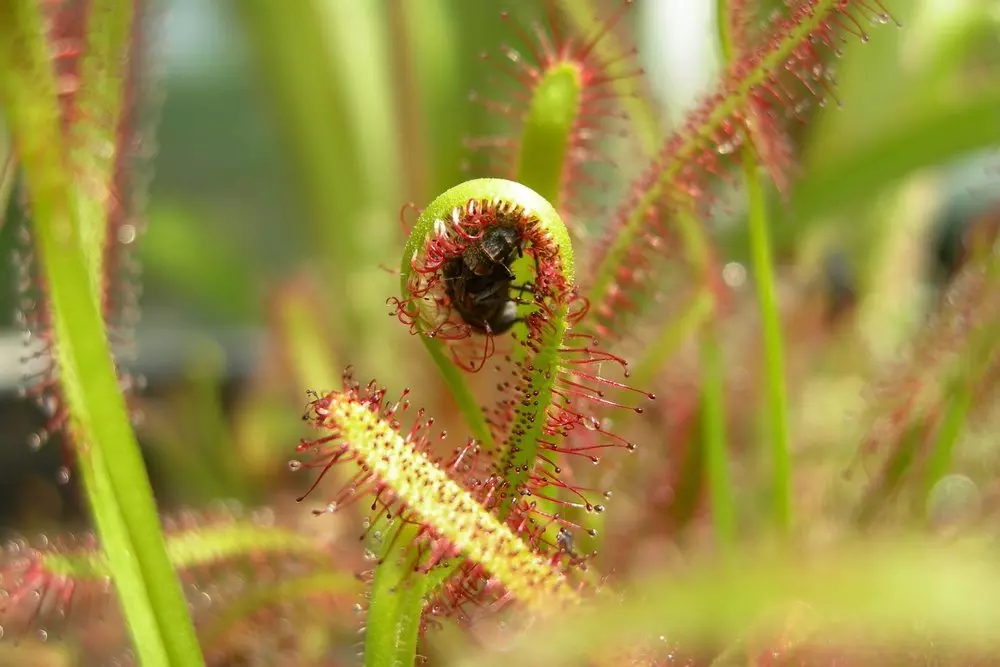
Carnivorous plants, such as sundew, use an adhesive trapping mechanism, with which they catch insects and subsequently digest them. For her PhD at Groningen University, researcher Abinaya Arunachalam translated this natural strategy into a new approach to pest control.
Arunachalam researched soft adhesive materials based on water, that physically hold on to pests. These materials as inspired by plant secretions and consist of natural components, such as sugars, organic acids and biopolymers. The formulations can be sprayed on leaves, where excessive water evaporates and stickiness is restored.
Laboratory and greenhouse experiments have shown that these organically decomposable adhesive substances can efficaciously catch pests such as the Californian thrips, without doing damage to the plant. The researcher also studied in what way air humidity, formulation and sprayability affect performance and researched the molecular interactions behind stickiness. (Sources: Groningen State University and AgriHolland)